







Dimitris Balatsouras | Photography | Travel the World | National Geographic
Dimitris Balatsouras | Photography and Travels
Dimitris Balatsouras is a doctor by profession and at the same time he has traveled to most of the world. He is an excellent photographer and has captured many of the moments of his travels in magical images like the ones shown below. His photo titled “Waiting for food” was recognized by National Geographic, one of the world’s largest educational and scientific non-profit organizations dedicated to the exploration and protection of our planet, and was published as the photo of the week on September 14 2018.
AWARD FROM NATIONAL GEOGRAPHIC
Photo of the Week │ Photograph by Dimitris Balatsouras, National Geographic Your Shot
Waiting for Food: Awarded in National Geographic as photo of the week and in Daily Dozen.
Copyright: © Dimitris Balatsouras
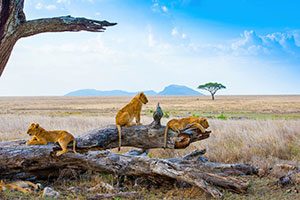
Waiting for food

During the tour of Serengeti National Park in Tanzania, Dimitris Balatsouras came across these three cubs, waiting patiently for their food from mama lioness, which could not be seen. Balatsouras’s picture was recently submitted to Your Shot, our storytelling community where members can take par in photo assignments, get expert feedbak, be published. The photo was published twice, in Photos of the Week, September 14, 2018 and in Daily Dozen, Nov 29, 2018.
… National Geographic Daily Dozen, Nov 29, 2018: Waiting for food
Camera: NIKON D800 Focal Length: 82 mm Shutter Speed: 1/100 sec Aperture: f/14 ISO: 800
You have traveled to many countries, can you tell us a few things from all these trips you have made?
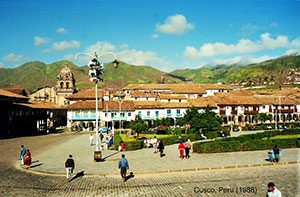
Cusco, Peru
I started the big trips quite young. My first exotic trip was Thailand (until then the biggest was in the USA), as part of the graduation trip we did before graduating from the Medical School of Athens. From then on I developed a love for distant countries and a desire to see the world. Travel used to be an adventure, difficult and expensive flights with many stops, absence of Internet and information, travel guides counted on the fingers, and of course no need for credit cards, ATMs, hotel reservations and other such luxuries. But it had such a quality and beauty that you hardly find today, with travel industrialization, agencies and organization.
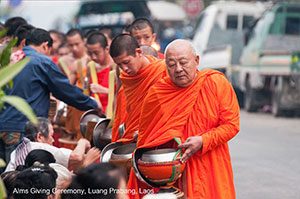
Alms Giving Ceremony, Luang Prabang, Laos
I always try in my travels to maintain that original freshness, the charm of the first sight (even if I have seen the same place many times), the search for the new and the unexpected. I would say that the purpose of each of my trips is educational, cultural, I am more attracted to “third world” places, old civilizations and ancient monuments, religions, temples, hot and humid climates, smiling and optimistic people, tribes , jungles and desert, disorder and chaos. I’m not interested in resorts and entertainment, Greece has me covered for that, I haven’t visited Mauritius, the Maldives or the Seychelles and I don’t intend to.
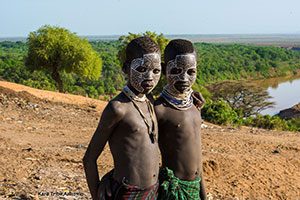
Karo Tribe, Aιθιοπία
My travels are not people-centric, not that I am not interested in people, but I am equally interested in the nature, monuments, sights, written and oral history of the place I visit.
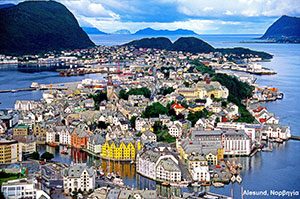
A strange sign, an original building, a strange landscape, an advertisement, a celebratory event, all are points of interest and attention for me, because they give me the overall image of a place, which I will try to convey with my photographs. 3-4 years ago I started a systematic effort to post representative photos from each of my trips.
My purpose was not simply to list the photos, but also to accompany them with some information about each one. This ongoing effort has received a warm response, and many friends have asked me to create a travel blog.
But since I am a perfectionist and would need much more time for this, which unfortunately does not exist since I also have a full and busy professional career, I leave it for later, when my professional obligations have reduced.
Are you a photography enthusiast, we would like to hear more about this activity of yours
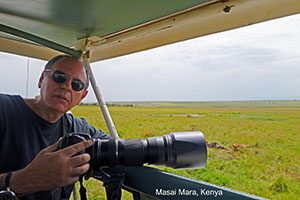
Masai Mara, Kenya
Throughout my life I have combined travel with photography. Even from the analog era I keep very good photos, scanned from slides. I’m self-taught, but I’ve read a lot of books about it and I’ve always made sure I have great gear.
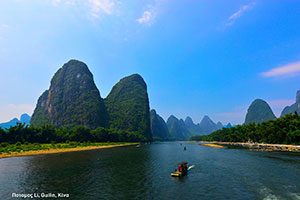
Li River, Guilin, China
I deal only with travel photography, in our country I actually take very few photos, I believe there are many others to immortalize the beauties of Greece. In a trip I am interested in everything, I want to give the general picture and the peculiarities of a place, so that when someone sees one of my albums, they feel that they are there, that they have traveled with me.
I have a special love for nature and wildlife photography. Safaris in Africa are for me a top photographic destination that fascinates me, although you need to carry bulky photographic equipment. I don’t like black and white photos, color for me is a dominant element and of course the right lighting! I always shoot in Raw and edit my photos with Photoshop, which for me is the equivalent of the old photographer’s workshop. There is a lot of talk about processed and unprocessed photography, but few people realize that all photos from modern cameras in jpeg files are automatically processed by the camera programs by default. I prefer to do this processing myself and especially for each photo.
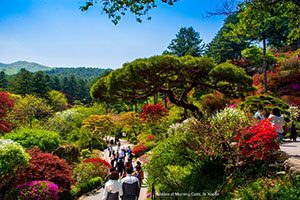
Garden of Morning Calm, South Korea
I generally loathe photo contests on principle. Because I consider photography to be a visual art par excellence, I cannot fathom who and how can compare and rank photographs by Phil Borges, Rehahn, Jimmy Nelsson or Steve McCurry for example.
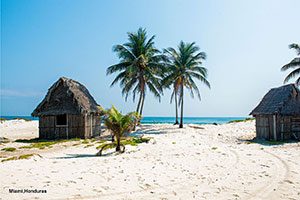
Honduras
Making a parallel, it would be as if Matisse, Picasso, Van Gogh, Chagall entered a painting competition! Photo contests today are held purely for profit and advertising purposes. I have only sent photos of myself to National Geographic.
National Geographic is something else for me, a childhood love. I grew up waiting for the first of every month (when I collected my parents’ pocket money) to buy the monthly issue from Samouhos, the foreign language bookstore in Stadiou. Later I became a subscriber and finally we moved into the digital age, with online reading, while the old yellow issues were stored in the basement.
And I was delighted when a photo of mine from Tanzania’s Serengeti was recently honored as photo of the week!
Box 1: Safari in Africa
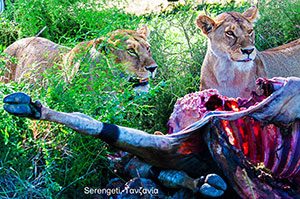
Serengeti, Tanzania
There are many national parks for safari in Africa, but for me, Tanzania’s Serengeti is unique. Few people forget their first encounter with the Serengeti. Maybe it’s the view from Naabi Hill at the entrance to the park, from where the grasslands seem to stretch to the ends of the earth. Or it may be a coalition of lions marching proudly across the open plains, their manes blowing in the wind. Or it could be wildebeest and zebra moving by the millions, following the ancient rhythm of Africa’s ages.
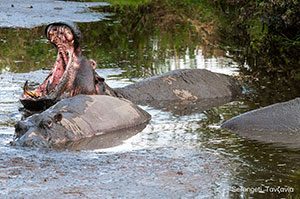
Serengeti, Tanzania
Whatever it is, the Serengeti epitomizes quintessential Africa: vast rolling plains stretching as far as the eye can see, punctuated by thorny acacia umbrella-bushes, jagged rocks and sedges, hippos and crocodile-infested rivers.
Visiting the Serengeti and spending the night in a safari tent under the stars, listening to the chilling cries of hyenas outside your tent, is an exciting and unforgettable experience! There are other amazingly beautiful wildlife parks in Africa, Kruger, Ngorongoro Crater, Masai Mara, Tarangire, Chobe, each offering a different picture to the visitor.
Inset 2: Japan
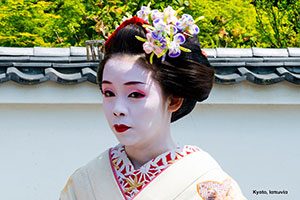
Kyoto, Japan
Just like anyone who has ever eaten sushi, read manga, driven a Japanese car or motorcycle, or watched a samurai movie thinks they know something about this country, so I thought this was a journey destined, a journey without surprises. And yet, from the moment you arrive at this compact archipelago of some 6,800 volcanic islands, it’s as if you’ve landed on another planet. It is a land unlike any other and it is impossible for you to fully understand this magical land, where ancient gods, ancient customs and age-old arts are mixed with cutting-edge technology, futuristic fashions and the most advanced pop culture in the world.
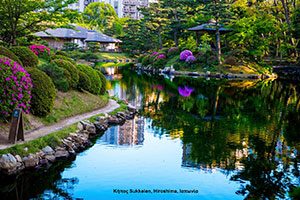
Shukkeien Garden, Hiroshima, Japan
On the one hand, the bustling urban centers, with their bright neon lights, countless crowds, towering buildings and crowded streets, and on the other, the obvious sense of history and ancient cherished traditions, the landscapes of incredible beauty, the unique gardens and kind and welcoming people who invite you to immerse yourself in Japanese history and culture and enjoy the richness of Japanese visual arts.
This mysterious yet alluring culture blurs the traditional boundaries between East and West – Japan is unique, neither entirely one nor the other, a place where ancient traditions merge with modern life as if it were the most normal thing in the world.
Inset 3: Tibet
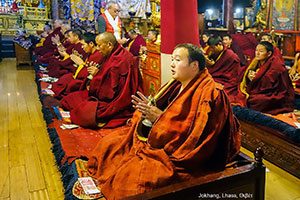
Jokhang Temple, Lhasa, Tibet
The vast, peaceful land of Tibet, the “Roof of the World”, with its enchanting landscapes and mysterious religious culture has exercised an incredible attraction for travelers for centuries. A land of bright sunshine and imposing snow-capped peaks, where crystal clear rivers and sparkling turquoise lakes irrigate cascading Tibetan barley fields dotted with yaks and nomad tents, magnificent monasteries, prayer halls with chanting monks, mountain passes draped in colorful prayer flags and distant rugged meditation retreats.
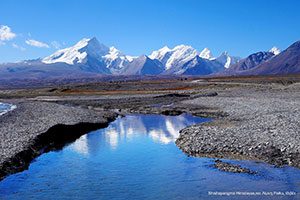
Himalayan Mount Shishapangma and Lake Peiku, Tibet
Tibetans have a level of devotion and faith that seems to belong to an earlier, almost medieval era, seeing the daily toil and harsh environment that surrounds them as challenges on their way down the path to life’s sole purpose, the attainment of spiritual enlightenment .
The other great attraction of Tibet is the pristine beauty of one of the most isolated parts of the world, the vast Tibetan Plateau, which stands at an average height of 4,500 meters above sea level, guarded by towering mountain ranges, the Himalayas, the Karakorum, the Kunlun.
The scenery is stunning, the religious devotion overwhelming, and the Tibetan people welcoming and wonderful. However, beneath the surface, it is abundantly clear that Tibet’s past has been tragic, its present painful and its future bleak: today Tibet is a vassal colony of China.
And while we don’t expect to find a romantic Shangri-La, there’s no doubt that most of us are shocked by the heavy military presence and authoritarian restrictions of the Chinese occupiers, which negatively affect travel to the Roof of the World.
Must-see landscapes, cultures and sights that you particularly liked?
The list is endless:
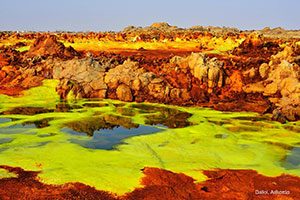
Dallol, Ethiopia
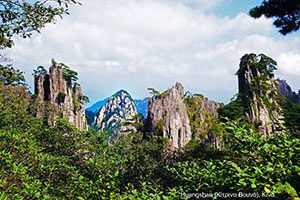
Huangshan (Yellow Mountain, China)
Dallol on the border of Ethiopia and Eritrea, the hottest region on earth, surrounded by the barren Danakil Desert, a lifeless place that with its incredibly vivid tones of blue, yellow and brown make it unique, feeling like you are in another planet.
Huangshan, the Yellow Mountain of China. If you climb only one mountain in China, it should be Huangshan. With no particular religious significance, the mountain is known for its sea of clouds, strangely formed vertical rock cliffs, and ancient twisted pines – features that have enchanted and inspired countless painters and poets for over 1,500 years.
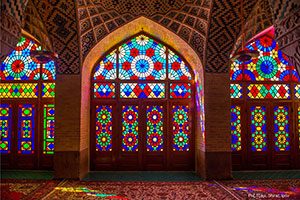
Pink Mosque (Nasir-ol-Molk Mosque), Shiraz, Iran
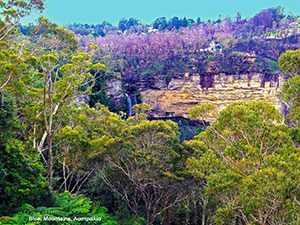
Blue Mountain National Park, Australia
The dramatic curve of the Colorado River, Horseshoe Bend, near Page, Arizona. The Pink Mosque – the Mosque of Swirling Colors (Nasir-ol-Molk Mosque) in Shiraz, Iran, perhaps the most beautiful mosque in the world. The gardens of Japan, China and South Korea. The temples of Kyoto, Luang Prabang and Chiang Mai. The fishing villages of the Garifunas on the unspoiled north coast of Honduras.
The unique tribes of the Omo River Valley in Ethiopia and the primitive hunter tribes of Lake Eyashi in Tanzania. Australia’s Blue Mountains National Park with Wentworth Falls and the Lake District of southern Chile, before Patagonia.
Kathmandu’s Durbar Square, almost restored again, after the destruction of the great earthquake. The Mayan pyramids in Tikal, Guatemala and Palenque, Mexico, in the dense jungle. The castles of Oman and Palmyra in Syria, which I managed to see just before the disaster. And I stop here!
Tell us about some trips that stood out
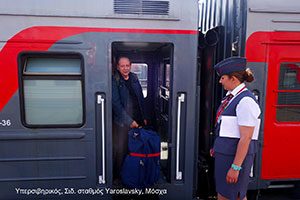
Trans-Siberian, Yaroslavsky Railway Station, Moscow
Trans-Siberian and Mongolia
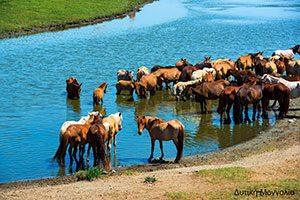
Western Mongolia
I don’t need to say much about this epic train journey, which crosses a third of the world, rolling between 7 time zones and many thousands of kilometers of taiga, steppe and mountains.
Few other routes allow you to come face to face with so many enchanting environments, with wonderful natural wonders and with such diverse cultures.
Enchanting landscapes, wonderful and majestic Siberian cities, the amazing Lake Baikal, and then Mongolia. This desolate, isolated, nomadic, wild land of vast steppes and the Gobi Desert, the former empire of Jeghis Khan, is a unique destination unlike any other.
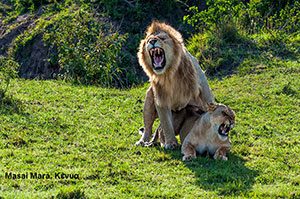
Masai Mara, Kenya
East Africa
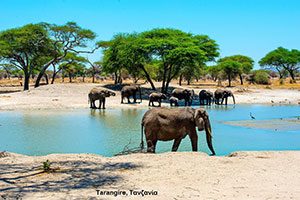
Tarangire, Tanzania
Tanzania, Uganda, Kenya: East Africa is the land of countless millions of pink flamingos gracefully striding through the shallows of lakes, wildebeest and zebra migrating by the millions with Africa’s top predators following in their wake.
It is the last great wilderness for these creatures to survive, the last paradise on earth, the perfect place to answer Africa’s call to the wild by planning a safari, a transformative journey through some of the continent’s most extraordinary landscapes, wild and untouched, filled with the densest concentrations of wildlife in Africa. You will also meet friendly people and fascinating cultures: Maasai warriors in red cloaks, nomadic tribes and primitive hunters, warm and kind locals, in one of the few safe areas of the continent.
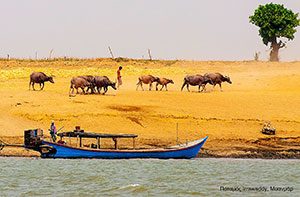
Irrawaddy River, Myanmar
Myanmar (Burma)
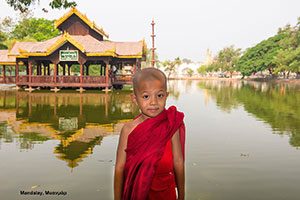
Mandalay, Myanmar
Myanmar is a mysterious place, cut off from the outside world for many decades, with many hidden treasures that are now beginning to be discovered: the thousands of temples in the Bagan region, the one-legged rowers and floating gardens of Inle Lake, the vast navigable rivers to the ends of the land.
Glistening golden pagodas, fertile rice paddies, enigmatic ruined temples, scenic mountain trails, mythical caves and photo-perfect sunsets make traveling to Myanmar an enchanting experience.
But the big attraction is the chance to see a country where the feel of the old East remains strong, a place where Buddhism is still a way of life, where pious monks are more revered than rock stars!
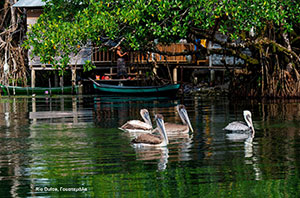
Rio Dulce, Guatemala
There are many more destinations that I single out, Tibet – the “Roof of the World”, Japan with its huge contrasts, Peru, Honduras and Guatemala, with its ancient civilizations and the culture of Latin America, the US National Parks, Norway with its fjords, but the list is very long. Every trip, however, has its special value.
How many countries have you traveled to in total, some countries that touched you the most?
I traveled to 96 countries. To tell the truth, now I had to count them for the first time, I had the impression that there were more! But I think that the number is not as important as the quality of each trip. Many people travel and don’t even get news about the essence and the real image of a place and a people!
The countries I loved the most are Burma, Tibet, Japan, Tanzania, Thailand, Mongolia, Iran, Peru, Mexico, Honduras, Norway and Portugal.
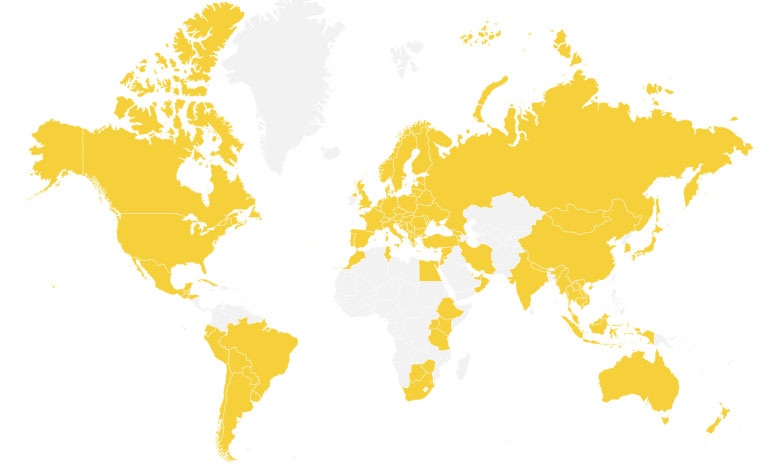
The countries that Dimitris Balatsouras has traveled to
Europe: San Marino, Albania, Andorra, Austria, Vatican City, Belgium, Bosnia and Herzegovina, Bulgaria, France, Germany, Denmark, Switzerland, Estonia, United Kingdom (and Scotland), FYROM (North Macedonia), Spain, Italy, Kosovo, Croatia, Cyprus, Latvia, Belarus, Lithuania, Liechtenstein, Luxembourg, Malta, Montenegro, Moldova, Monaco, Norway, Netherlands, Hungary, Ukraine, Poland, Portugal, Romania, Russia, Serbia, Slovakia, Slovenia, Sweden, Czech Republic, Transnistria, Finland
Asia: Armenia, Vietnam, Burma, Georgia, Tibet, Japan, India, Indonesia, Cambodia, China, Laos, Malaysia, Mongolia, Nepal, South Korea, Singapore, Thailand
Middle East: Egypt, United Arab Emirates, Jordan, Iran, Qatar, Oman, Syria, Turkey
Americas: Argentina, Bolivia, Brazil, Guatemala, Ecuador, USA, Canada, Cuba, Mexico, Belize, Honduras, Uruguay, Paraguay, Peru, Chile
Africa: Ethiopia, Zimbabwe, Kenya, Morocco, Botswana, South Africa, Uganda, Swaziland, Tanzania (and Zanzibar), Tunisia
Oceania: Australia, New Zealand
Shinbyu, the Burmese ceremony Copyright: © Dimitris Balatsouras
Dimitris Balatsouras
Doctor, Amateur Photographer, World Traveler
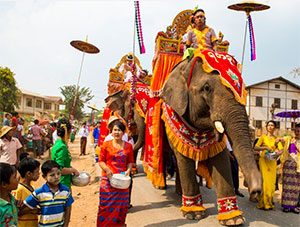
My photo was taken during Shinbyu, a Burmese ceremony in the tradition of Buddhism, when the young boys are riding on horses or elephants going to the local Buddhist monastery, to become novice monks studying the Dhamma for one year or more. Shinbyu is not programmed and it is a matter of luck to encounter this procession during a visit to Myanmar
… National Geographic Profile of Dimitris Balatsouras
0 Reviews
Write a Review
Sponsored Ad
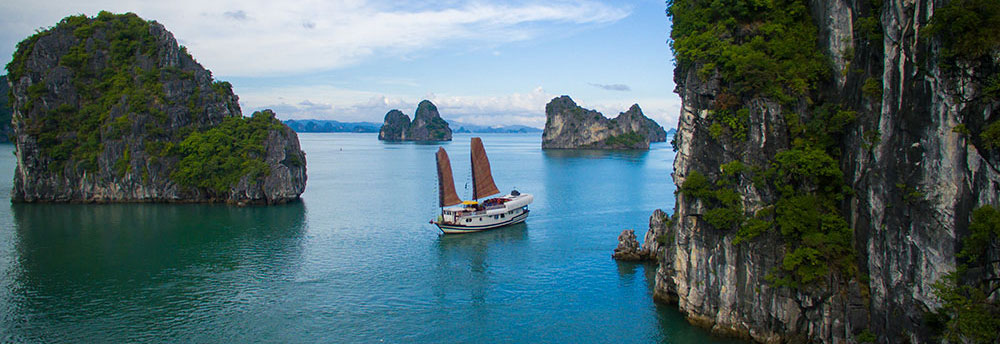
Halong Bay Cruises
Discover Southeast Asia's stunning scenery and enjoy an unforgettable experience in one of the most popular destinations